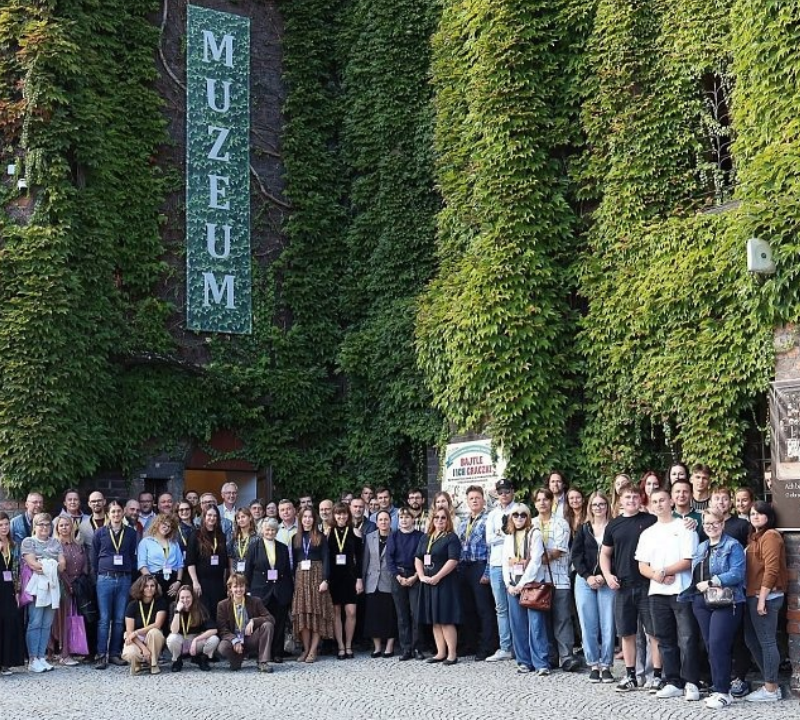
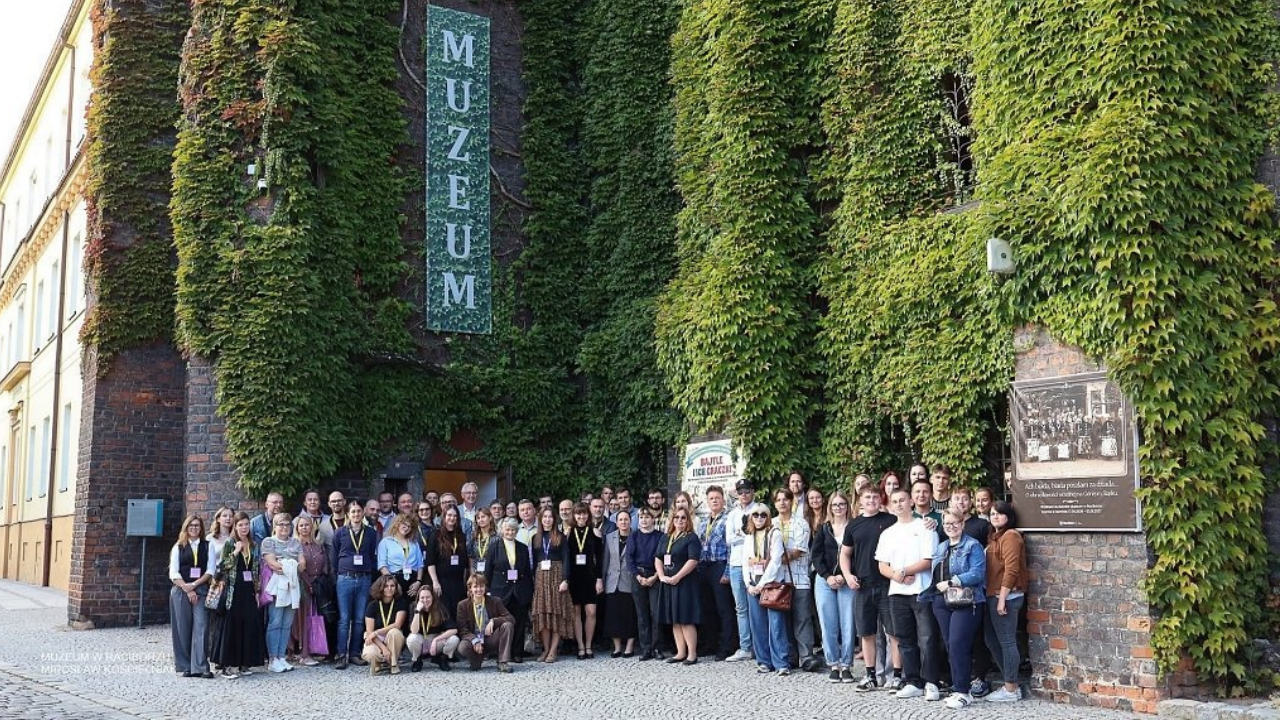
From 30 September to 2 October 2026, the Polish town of Racibórz hosted the international Silesian Archaeological Symposium (Śląskie Sympozjum Archeologiczne). The principal organisers were the Institute of Archaeology at the University of Wrocław and the Museum in Racibórz. The Faculty of Philosophy and Science at Silesian University in Opava also helped organise the event.
This year’s symposium was dedicated to the memory of two distinguished archaeologists, Professor Józef Kaźmierczyk and Associate Professor Vratislav Janák, both of whom made substantial contributions to the development of archaeological research in Silesia. At the opening ceremony, Andrea Hořínková, Ph.D., paid tribute to Vratislav Janák, a longstanding lecturer and archaeologist associated with Silesian University in Opava, highlighting his contribution to our understanding of the region’s archaeology.
The academic programme was divided into three thematic strands, covering a broad range of archaeological research from the Palaeolithic to the post-medieval period. The first day focused on Palaeolithic research in Central Europe and other parts of the world.
On the second day, attention turned to later prehistoric periods. Andrea Hořínková presented new findings on the chronology of the transition from the Early to the Middle Bronze Age in Czech Upper Silesia, drawing primarily on radiocarbon dating results. She also contributed a poster entitled Petrographic Analysis of Pottery Assemblages from the Transition between the Early and Middle Bronze Age in Czech Upper Silesia, which examined pottery petrography, manufacturing techniques and ceramic fabric composition. Both contributions drew on research supported by Silesian University in Opava’s Internal Grant Competition project IGS 2/26, “Scientific Analyses of Archaeological Assemblages from the Early–Middle Bronze Age Transition in Czech Upper Silesia”.
Hana Lafková also contributed to the poster session, presenting a study of a late medieval stave-built wooden bowl recovered from an urban context in Mohelnice.
Among the participants was archaeology student Adéla Smolíková, who prepared a poster with Peter Kováčik, Ph.D., entitled Salvage excavation at the site of Mlýnská Gate near Kroměříž Castle. It presented the results of rescue excavations in the area of Mlýnská Gate in Kroměříž. Taking part in the symposium also gave her experience in presenting academic work to an international audience.
The final day of presentations focused primarily on medieval and post-medieval archaeology. In this session, Hana Lafková presented an analysis of footwear from Grave No. 10 on Cathedral Hill in Olomouc. The academic programme was followed by an optional excursion on Saturday.
The symposium provided opportunities to present current archaeological research, discuss findings, exchange experience and develop international collaboration. Such collaboration is particularly important in the study of Upper Silesia, a historical region that extends across present-day national borders and whose past calls for a broader Czech–Polish research perspective.
We would like to thank the principal organisers for preparing the symposium, their warm welcome and the friendly atmosphere throughout the event. We returned from Racibórz with new insights, ideas for further research and fond memories of our time together.